Sequim Lavender
12 member farms · One valley
The fields
bloom every summer.
Mid-June to mid-September
Sequim, Washington · About 2 hrs from Seattle
Scroll
About the bloom
The Olympic Mountains catch Pacific storms before they reach the Sequim valley, so it gets about 16 inches of rain a year, about the same as Los Angeles. Dry summers, cool nights and well-drained soil suit lavender, which is why the valley grows so much of it. The bloom runs from mid-June through mid-September, and it usually peaks in mid-July, around festival weekend.
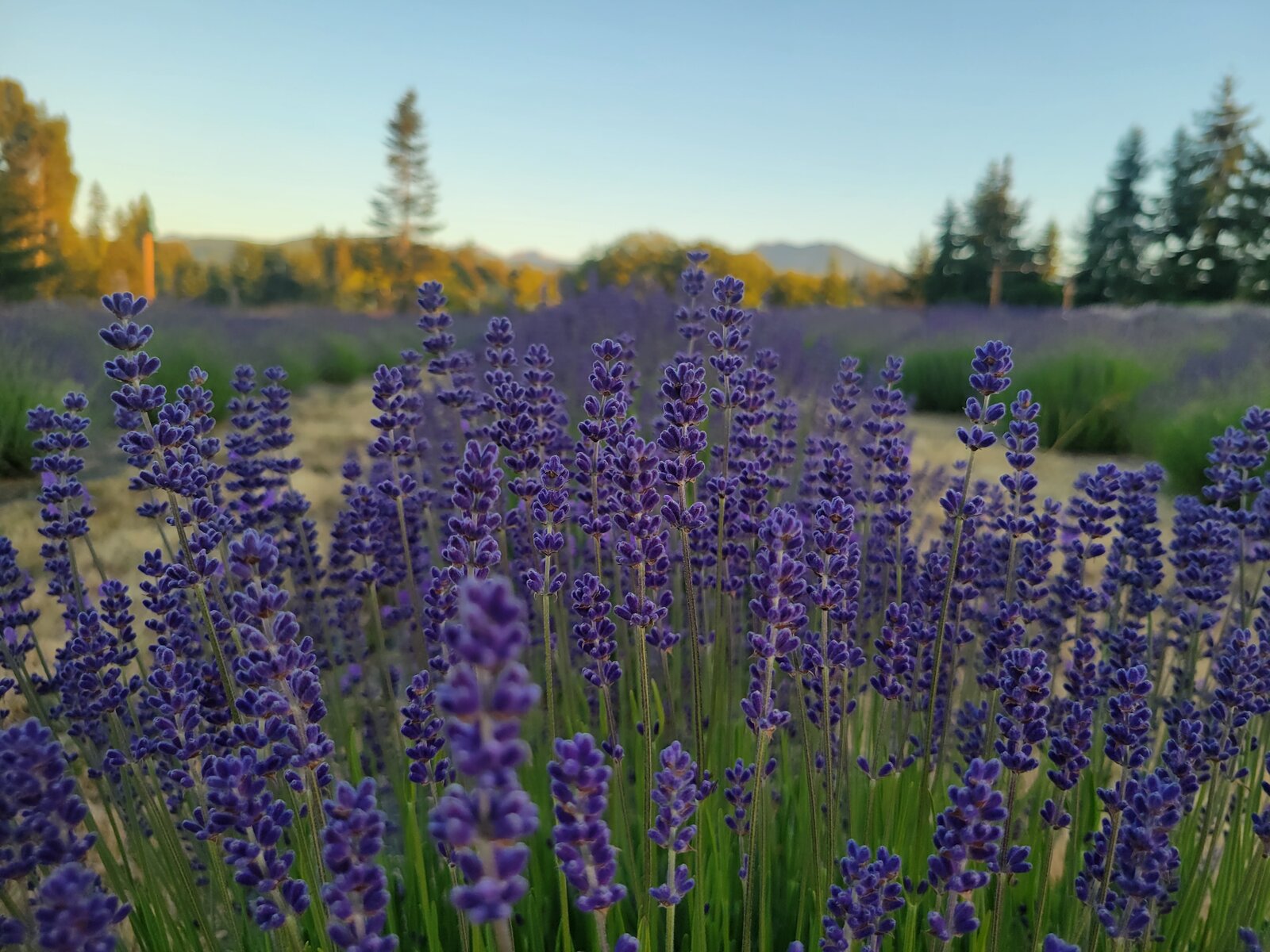
Morning light · July 2023
A microclimate
Photograph · Sequim Valley, July 2023
The science behind the bloom
Why lavender thrives in the rain shadow.
Seattle, WashingtonTwo hours east, on the wet side
Pacific storms roll in off the ocean and drop their rain on Puget Sound. Seattle's summers are mild and fairly dry, but the rest of the year is long, gray and wet, which is hard on a Mediterranean plant like lavender.
Annual rainfall~38″
Mostly sunny days*88
Sequim, WashingtonIn the Olympic rain shadow
The Olympic Mountains wring the rain out of those storms before they reach the valley. Sequim gets less than half of Seattle's rain and noticeably more sun, with dry summers, cool nights and well-drained glacial soil, much like the conditions lavender grows in around Provence.
Annual rainfall~16″
Mostly sunny days*127
*Days counted in a 2010–2011 study of the Olympic rain shadow and downtown Seattle.
Bloom timeline
When to come, what you'll see.
Different varieties peak at different times, and every year runs a little early or late. These are typical windows; check the live bloom status before you go.
Weeks 1 – 3
Jun 15 – Jul 5
Early bloom
English lavenders such as Hidcote and Munstead open first. Smaller crowds and the first color in the fields.
Weeks 4 – 5 · Peak
Jul 6 – Jul 19
Peak bloom + festival
Most fields are in color and the lavandins such as Grosso and Provence come in. The festival is in mid-July, so this is the busiest stretch.
Weeks 6 – 8
Jul 20 – Aug 9
Mid bloom
Lavandins are in full bloom and harvest begins on many farms. After festival weekend the farms are quieter.
Weeks 9 – 11
Aug 10 – Aug 30
Harvest
Many fields are cut for drying and distilling, and some farms close for the season. Check hours before you drive out.
Weeks 12 – 15
Aug 31 – Sep 15
End of season
Some English varieties rebloom and a few farm shops stay open. The quietest weeks of the season.
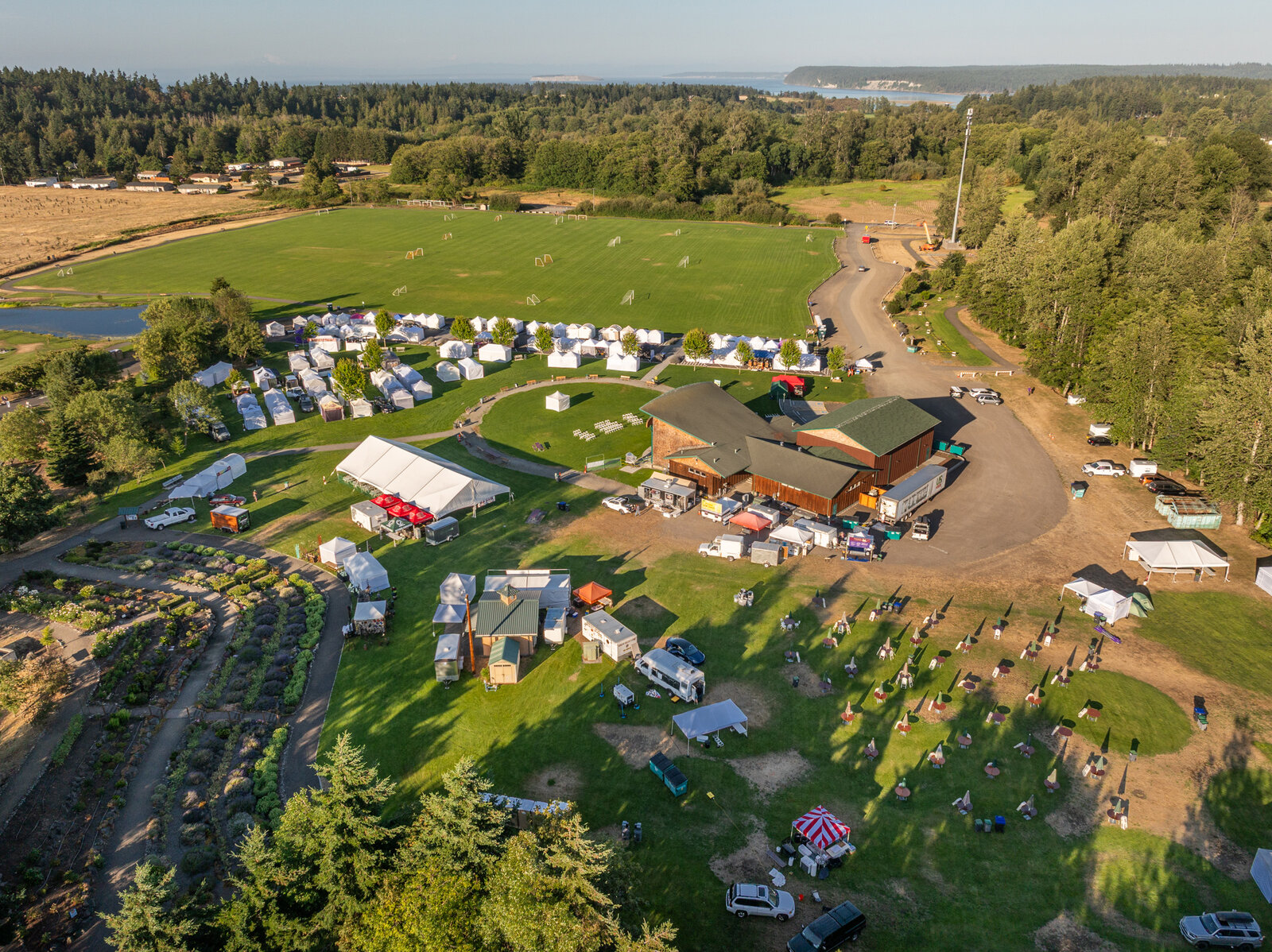
From above · Peak bloom · July 2025
Twelve member farms.
Twelve member farms.
One valley.
Drone photograph · Sequim Valley, July 2025
The 12 SLGA member farms
Twelve farms. One association. Three decades.
These are the members of the Sequim Lavender Growers Association, the nonprofit behind the Sequim Lavender Festival. Listed in no particular order; hours and offerings vary by farm.
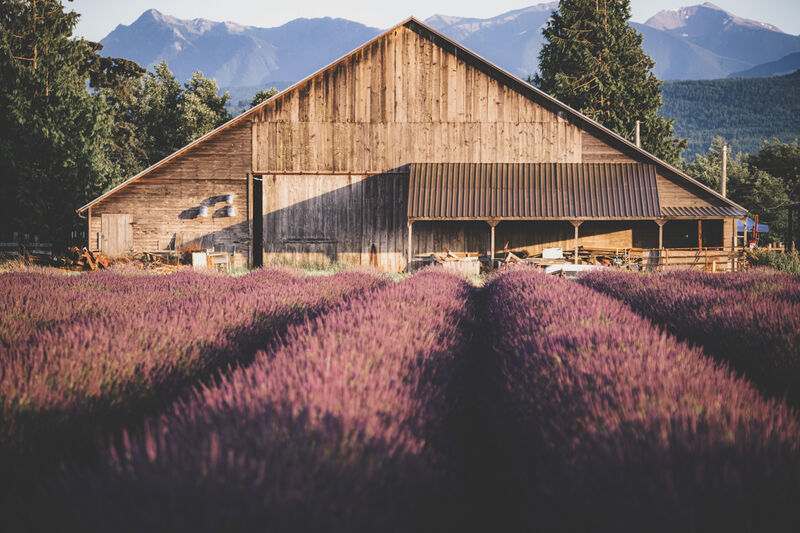
01
B&B Family Farm
Certified organic, with 14,000 plants on 12 acres around a 100-year-old barn and free farm tours in summer.
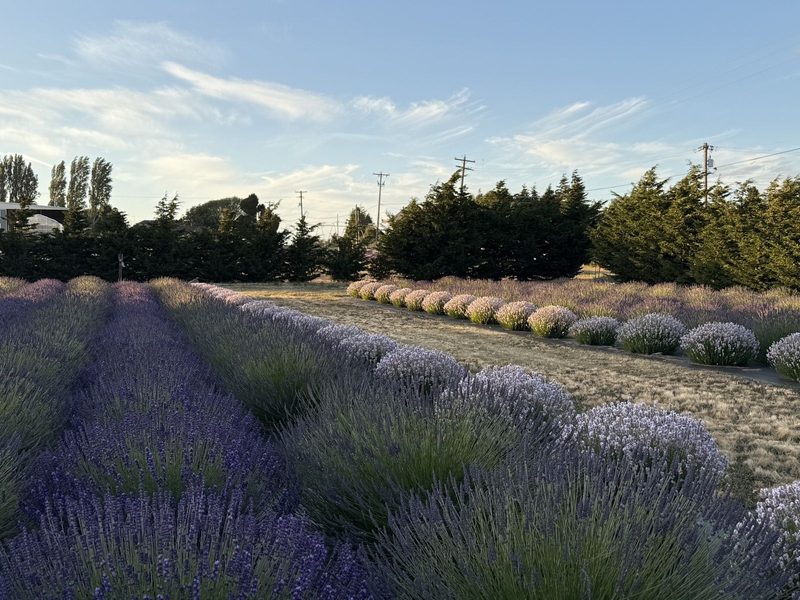
02
Lit Lavender
Mature lavender, flower gardens and a lily pond, with baby goats and garden games. Closed to public visits in 2026.
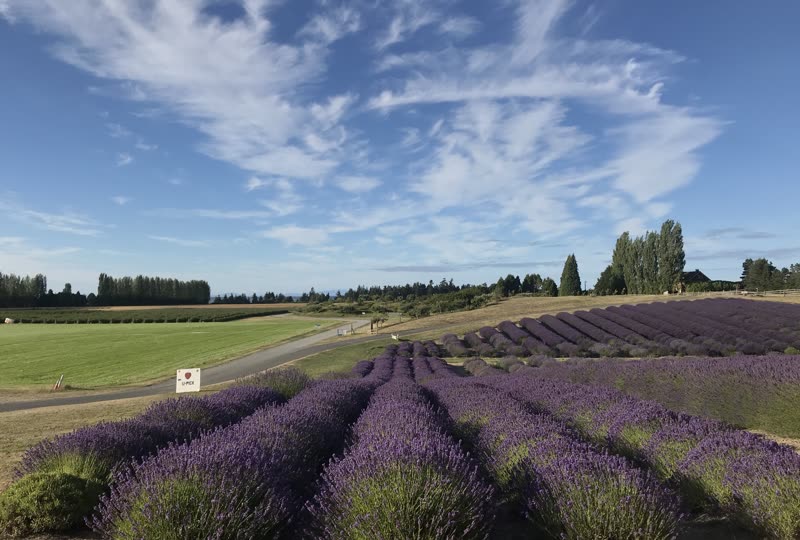
03
Graysmarsh Farm
Lavender, berries, honey and seasonal vegetables on Sequim Prairie, with a farm stand.
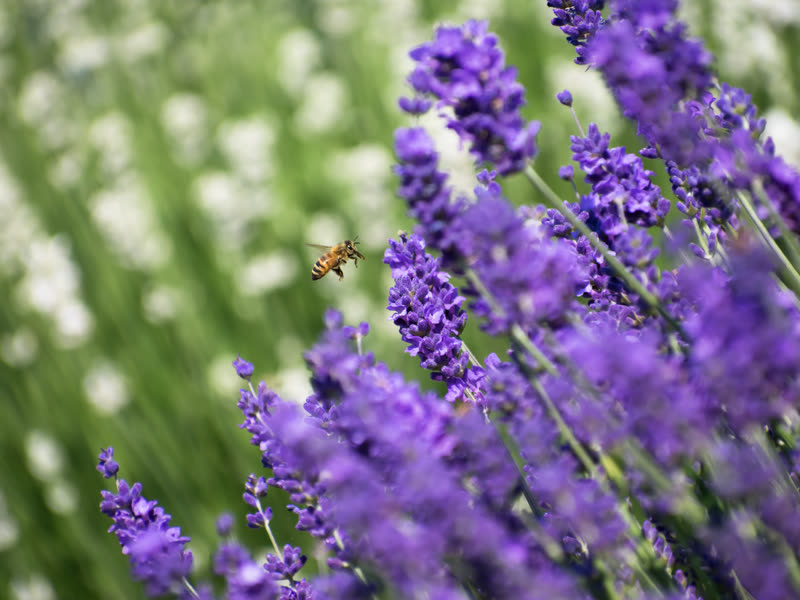
04
Old Barn Lavender Co.
A working family farm around a 100-year-old barn, with goats, sheep, chickens and bees.
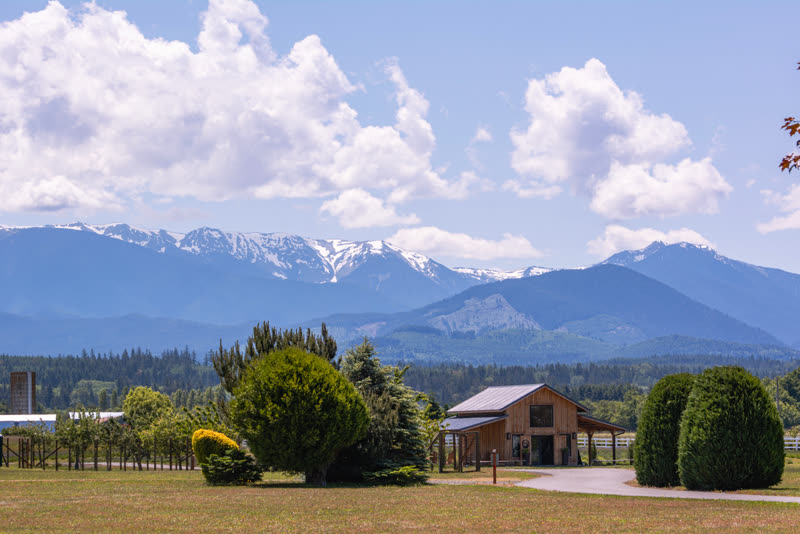
05
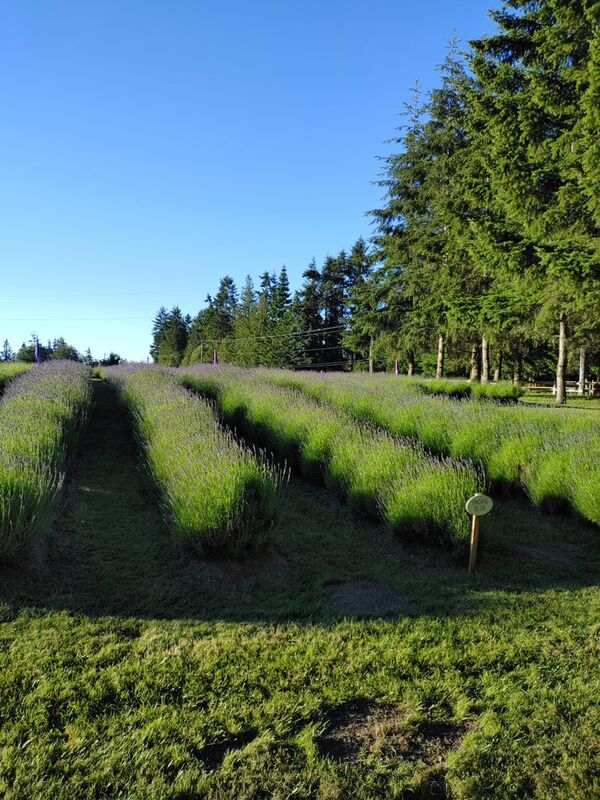
Olympic Bluffs Cidery & Lavender
A 21-acre lavender farm and cidery with views of the Salish Sea and the Olympics.
06
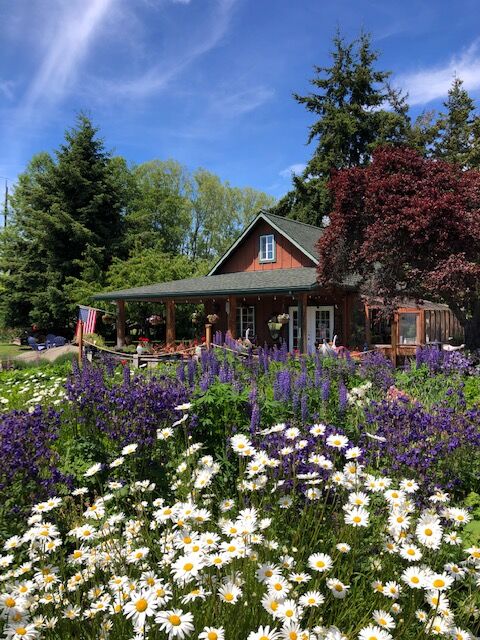
Nelson's Duckpond & Lavender
A second-generation family farm with more than 1,500 plants, a duck pond and a gift shop of farm-made goods.
07
Fat Cat Garden & Gifts
A smaller farm with lavender fields, picnic areas and a gift shop.
08
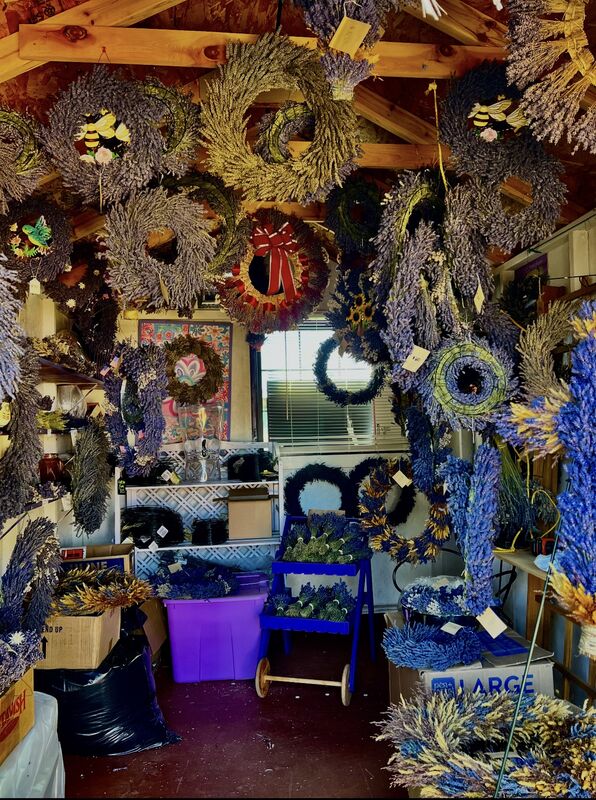
Meli's Lavender
Dried lavender bundles, sachets and handmade wreaths, with wreath-making workshops.
09
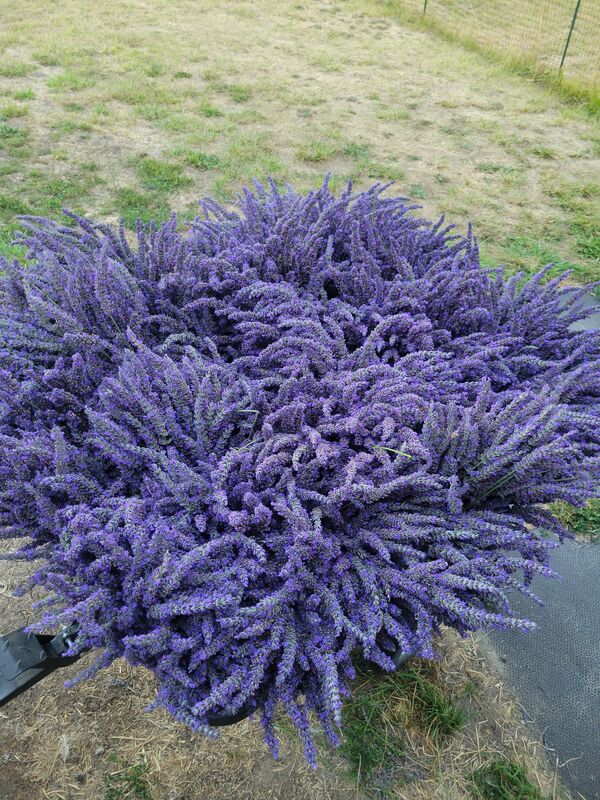
Rancho La Morada
A lavender and flower farm with fresh plants, bundles and U-pick.
10
Kitty B's Lavender Farm
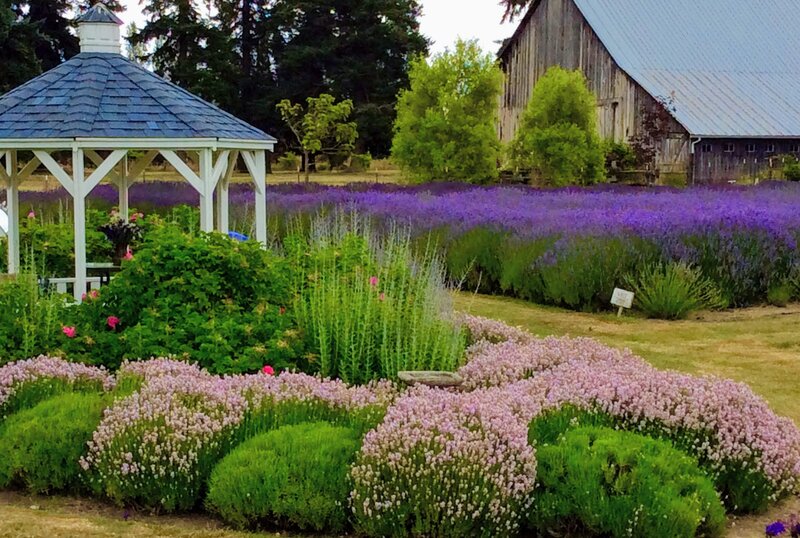
More than 2,000 hand-harvested plants on 2.5 acres, with a gazebo and room for a picnic.
11
In Bloom Lavender Farm
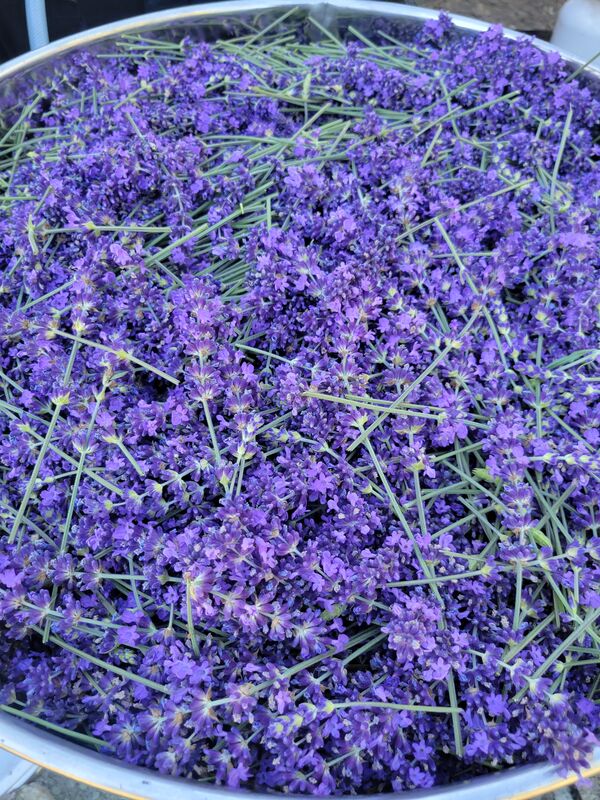
Closed to public visits in 2026.
12
Let's Do Lavender
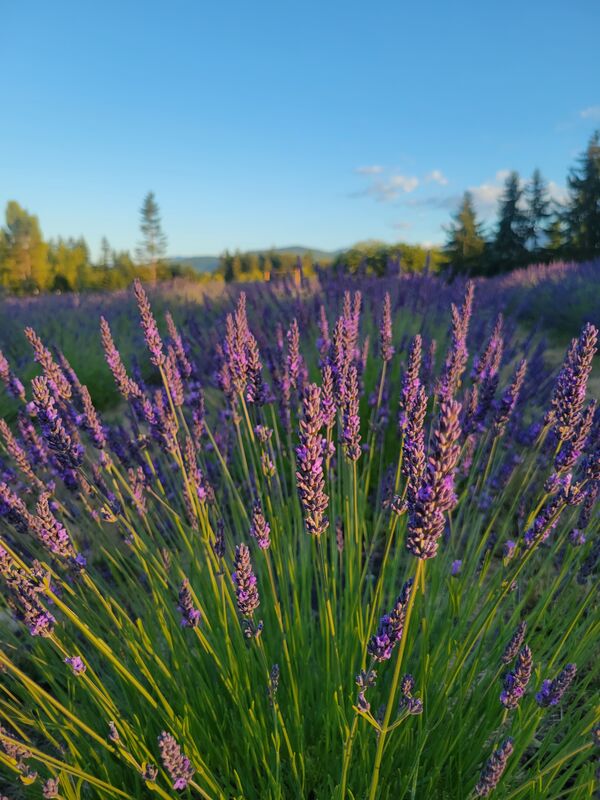
An SLGA member without a farm to visit. Look for their products at the festival.
Sequim gets about 16 inches of rain a year. Seattle, two hours away, gets more than twice that. That difference is the whole reason the valley turns purple every July.
Olympic rain shadow · Sequim, Washington
Free trip planner
The whole valley,
The whole valley,
on paper.
Sign up for bloom and festival updates and download the free trip planner: a farm loop map, a week-by-week bloom calendar, U-pick tips, and where to stay and eat. It's the 2026 edition until the 2027 guide is ready.
No spam. Bloom alerts and festival news only. Unsubscribe any time.
If you can only come once
Three ways to time it.
For peak bloom + festival energy
Festival weekend, mid-July
The street fair at Carrie Blake Park, music and free self-guided farm tours. More than 40,000 people come, so book lodging early. The 2027 festival is July 16–18.
About the festival →For peak bloom with fewer people
Early July
Most fields are in color before festival weekend brings the crowds, and parking is easier.
For a slower visit
Late July to early August
Lavandins are still blooming and the farms are quieter. Some farms start harvesting or close in August, so check hours first.
Need to know
Practical things.
Hours
Days and hours vary by farm, and most are open from mid-June through mid-September. See each farm's hours.
Cost
SLGA member farms are free to visit. U-pick bundles, workshops and tours are priced by each farm.
Getting here
About two hours from Seattle with the Bainbridge or Kingston ferry. Check sailings at wsdot.wa.gov/ferries.
Where to stay
Lodging fills up in July. Port Angeles (about 25 minutes west) and Port Townsend (about 40 minutes east) have more rooms. Lodging guide.
U-pick + Tools
Farms that offer U-pick show you where to cut. Some lend scissors, so ask when you arrive.
What to bring
Sun hat, sunscreen, comfortable shoes, water, and some cash for farm stands. The fields are full of bees, so bring allergy medicine if you need it.
Most asked
Questions.
When does Sequim lavender bloom?
Mid-June through mid-September. Peak bloom is usually mid-July, around festival weekend. English varieties bloom first; lavandins such as Grosso follow in July.
Are the farms free to visit?
SLGA member farms are free to visit. U-pick bundles, workshops and tours are priced by each farm, so check the farm's page for details.
How far is Sequim from Seattle?
About two hours with the Bainbridge or Kingston ferry, or about two and a half hours driving around through Tacoma.
What's the best weekend to visit?
For full bloom with fewer people, come in early July. For the festival, come on festival weekend, July 16–18, 2027. Late July and early August are quieter, but some farms start harvesting.
Can I U-pick lavender?
Yes, at several member farms. Each farm sets its own price. Check the farm directory for which farms offer U-pick.
Is Sequim accessible?
It varies. Farm paths are often grass or gravel, and some farms have accessible parking. See the accessibility page and contact a farm before you visit if you have questions.
See you
in the rows.
Get the planner and bloom alerts, and we'll let you know when the fields open.
Get the Free Trip Planner →
Bloom Season
Plan a summer visit
Plan →