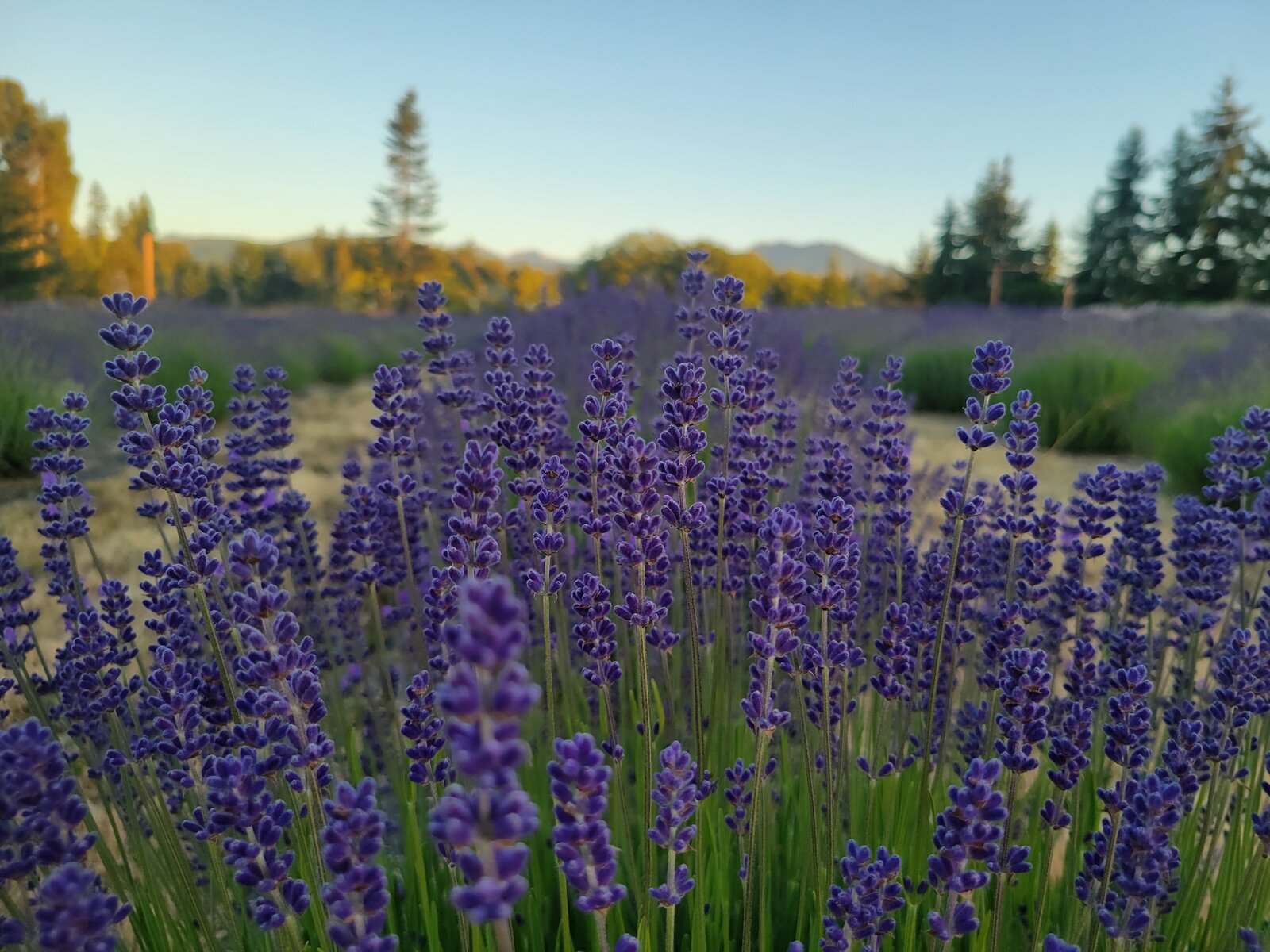
Sequim Lavender
15 weeks · 12 farms · One small valley
The fields
are blooming.
June 15 — September 15
Sequim, Washington · 90 min from Seattle
Scroll
A note from the growers
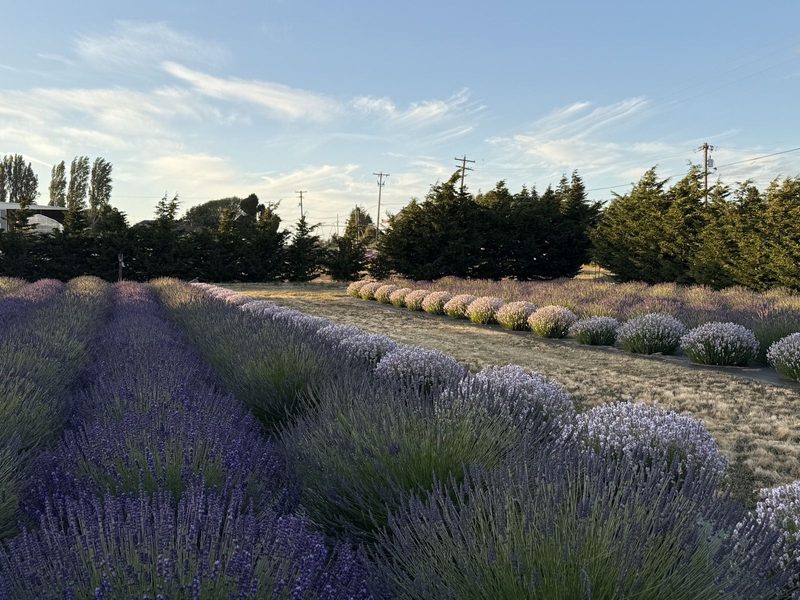
There's only one place in the continental United States that grows lavender at commercial scale. The Olympic Mountains block weather from the Pacific before it reaches us, leaving our valley with dry summers, cool nights, and the well-drained mineral soil this fussy crop needs. It's the same range Provence sits in. Twelve family farms grow more than thirty cultivars on this single peninsula — and from mid-June through mid-September, every weekend is bloom.
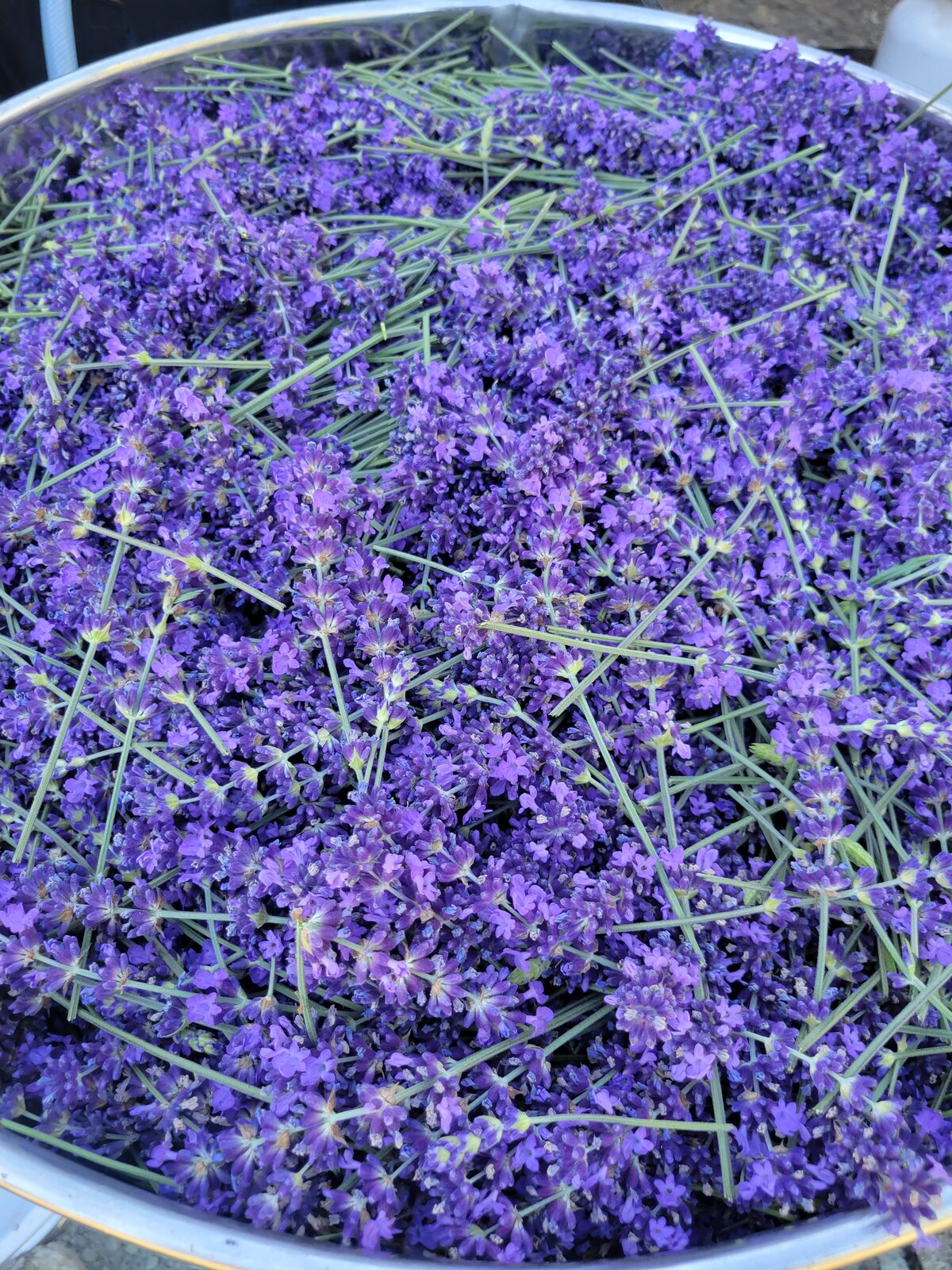
Morning light · July 2023
A microclimate
Photograph · Sequim Valley, July 2023
The science behind the bloom
Why lavender thrives here, and almost nowhere else in the US.
Provence, FranceThe world's lavender capital
The Vaucluse plateau in southeastern France produces the lavender most of us think of when we hear the word. Dry, hot summers. Cool nights. Mineral-rich limestone soil. Less than 18 inches of annual rainfall.
Annual rainfall~18″
Summer high85°F
Growing zone8a — 9a
Sequim, WashingtonThe only US match at scale
The Olympic Mountains create a rain shadow. Seattle gets 38 inches of rain; Sequim gets 16. Our summers are dry, our nights cool, our soil mineral. The climate parallels are not coincidence. It's why this is the only US valley that grows lavender like France does.
Annual rainfall~16″
Summer high75°F
Growing zone8a — 8b
15-week bloom timeline
When to come, what you'll see.
Different varieties peak at different times. When you visit depends on what kind of trip you want — quiet first flush, festival energy, or the deepest purples of late season.
Weeks 1 – 3
Jun 15 – Jul 5
Early bloom
Hidcote, Munstead, and English varieties lead. Lighter purples, smaller crowds, perfect for first-timers who want quiet.
Weeks 4 – 5 · Peak
Jul 6 – Jul 19
Festival week + peak
Grosso, Provence, Royal Velvet all blooming. Maximum visual impact. Festival is Jul 17 – 19. Crowds, energy, the works.
Weeks 6 – 8
Jul 20 – Aug 9
Mid bloom
French and intermediate varieties. Festival is over, fields are still gorgeous, weekends quieter. The smart visit.
Weeks 9 – 11
Aug 10 – Aug 30
Late bloom
Deepest purples, most fragrant fields. Underrated. Come here if you want intimate farm visits with no crowds.
Weeks 12 – 15
Aug 31 – Sep 15
Final flush
Second-bloom varieties, late-summer light, mature plants. The quietest weekends of the season. Mostly locals now.
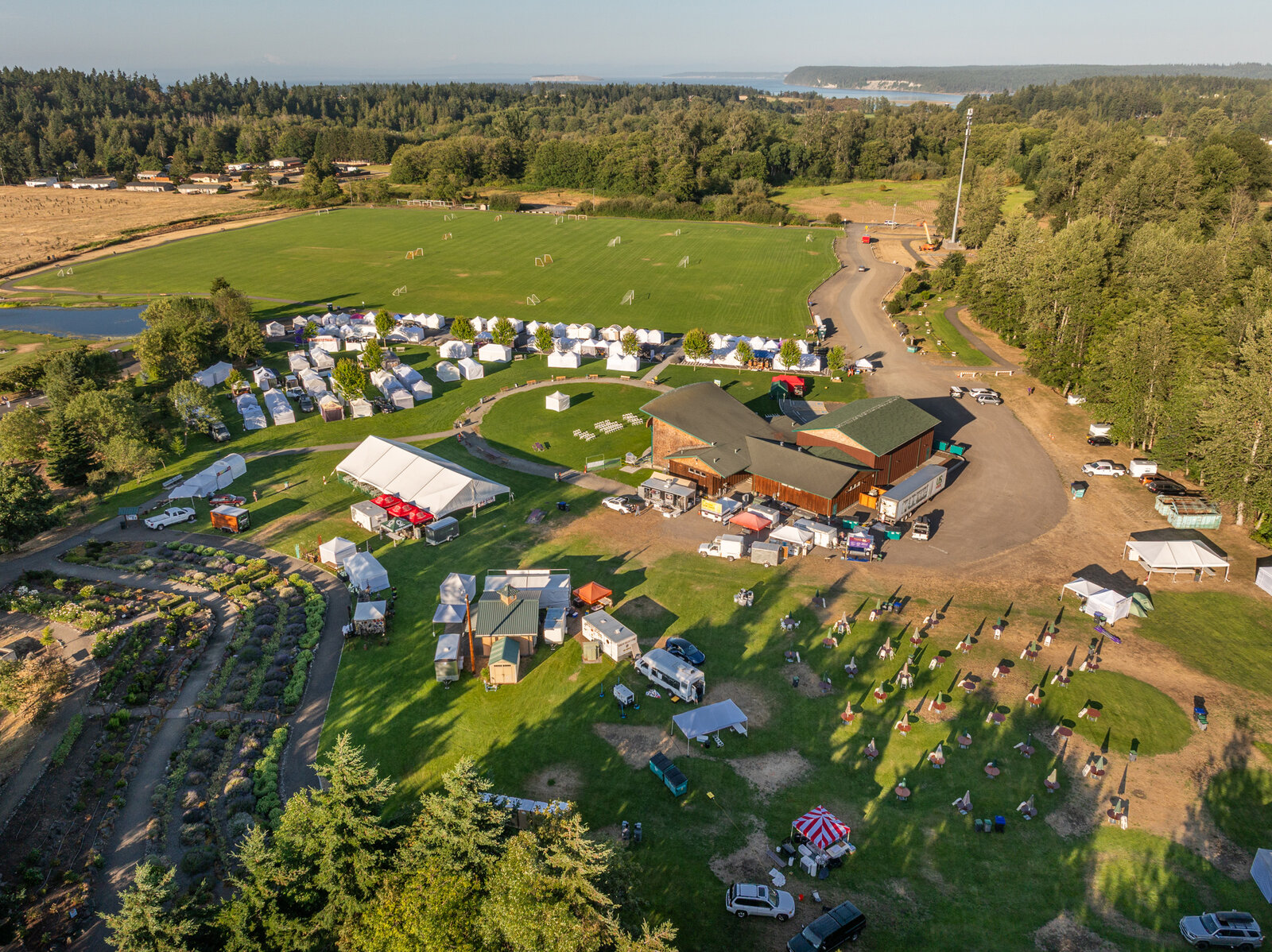
From above · Peak bloom · July 2025
Twelve farms.
Twelve farms.
Fifteen miles apart.
Drone photograph · Sequim Valley, July 2025
The 12 SLGA member farms
Twelve farms. One association. Three decades.
Each SLGA member farm has committed to public access, growing standards, and the annual festival. Some have been here since the 80s. All are family-run.
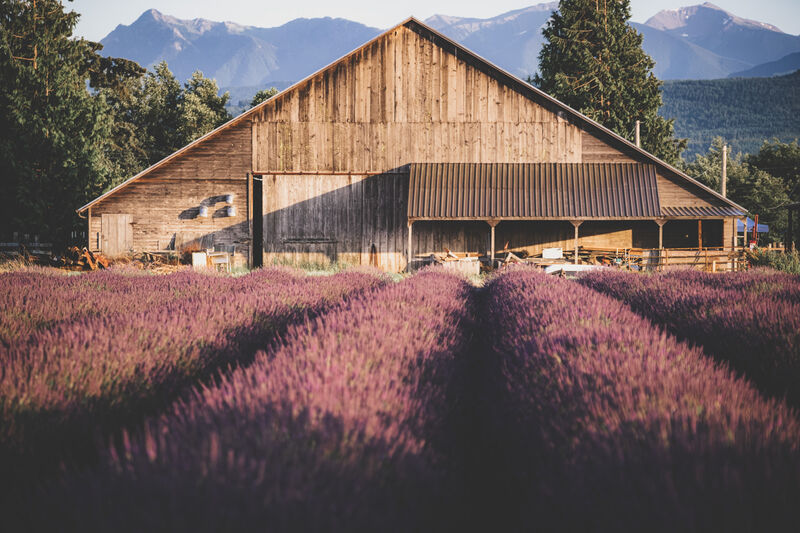
01
B&B Family Farm
100-year-old historic barn. 14,000 plants on 12 acres. Free farm tours daily. Lavender ice cream.
 The Original
02
Lit Lavender
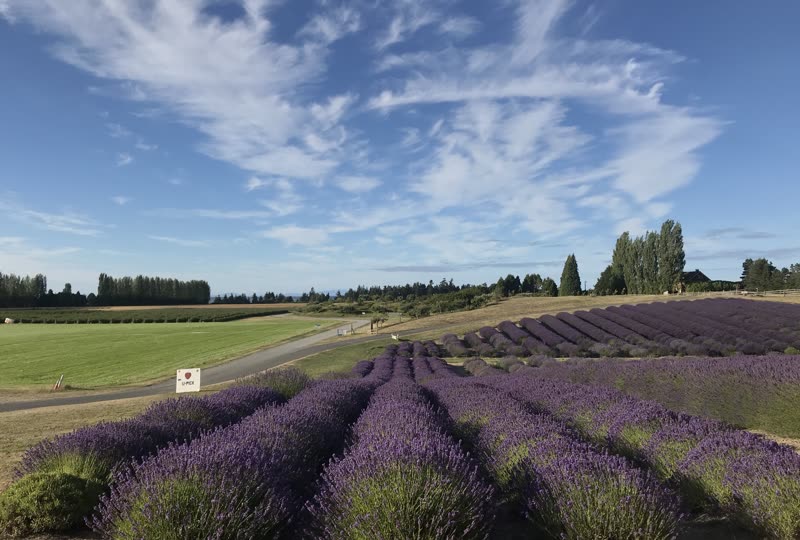
Formerly Olympic Lavender, est. 1997 — the farm where the first festival began. Baby goats, mini golf, glamping.
03
Graysmarsh Farm
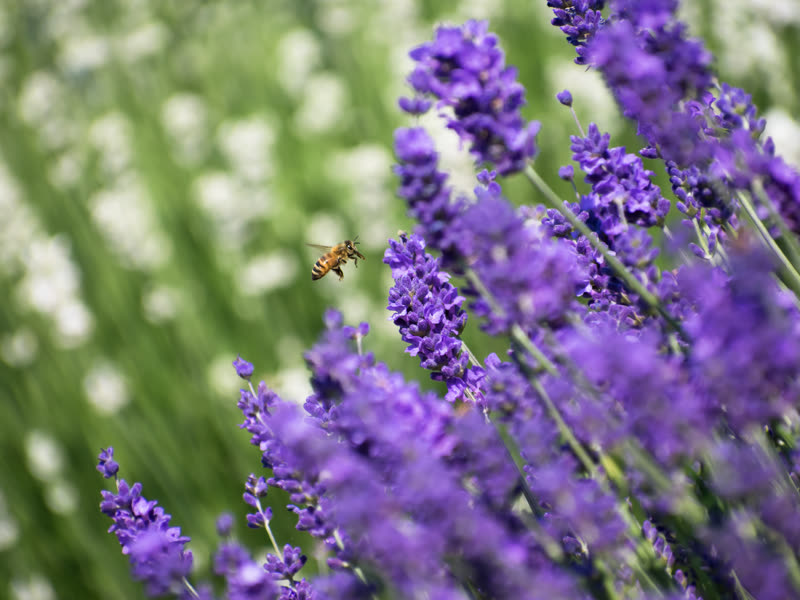
50+ years. U-pick lavender plus berries (raspberries, blueberries, blackcurrants). On-site distillery.
04
Old Barn Lavender Co.
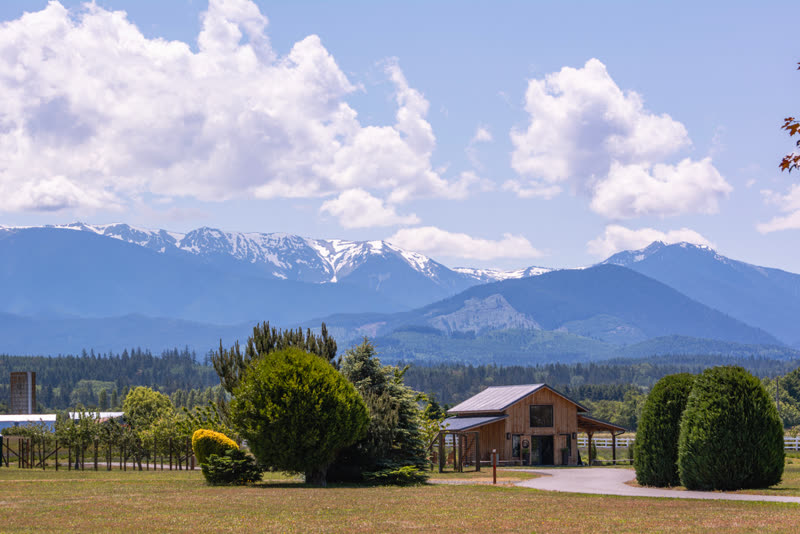
Award-winning dried wreaths and bouquets. Working antique barn. Most photogenic gift shop in the valley.
05
Olympic Bluffs Cidery & Lavender
The only lavender farm with a working cidery. Tastings, bluff views, lavender + cider — together at last.
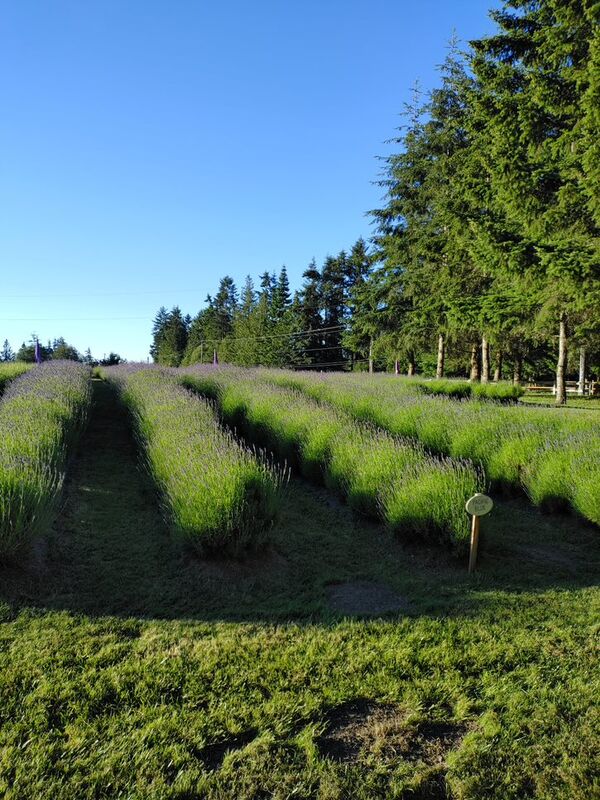
06
Nelson's Duckpond & Lavender
Working duck pond, family-run, picturesque. The most peaceful stop on the loop.
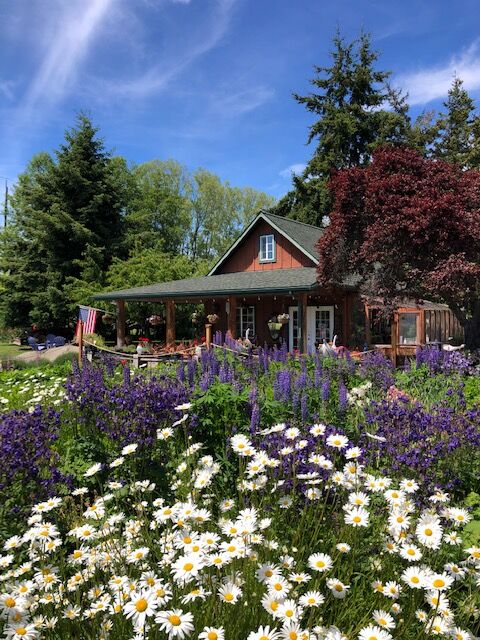
07
Fat Cat Garden & Gifts
Eclectic gift shop with curated PNW goods alongside lavender products. Worth the detour.
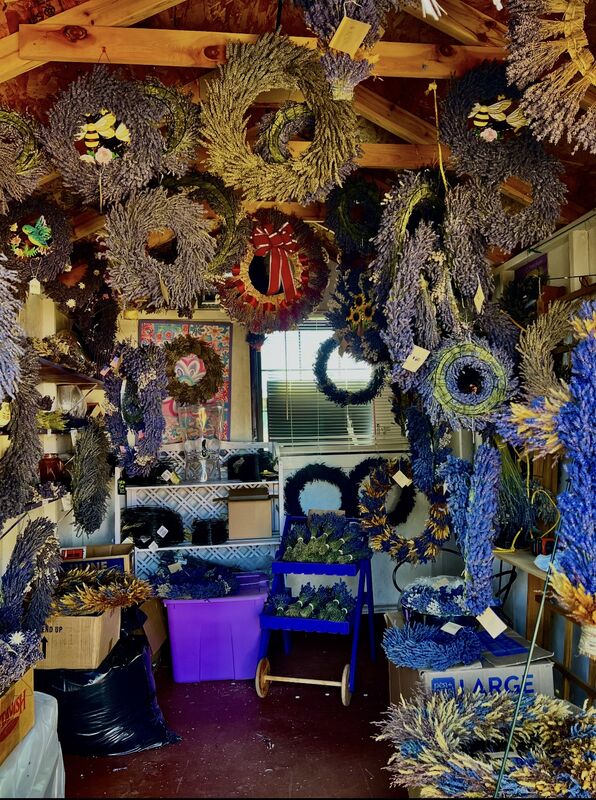
08
Meli's Lavender
Smaller, intimate farm. Family experience. Best for a slow afternoon visit.
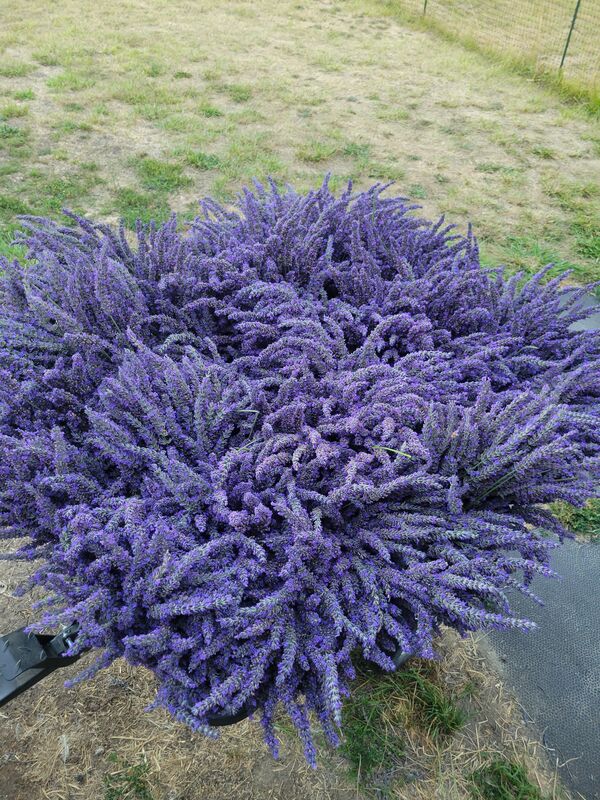
09
Rancho La Morada
Hilltop, Mediterranean-styled, distinctive. The light here is unreal at golden hour.
10
Kitty B's Lavender Farm
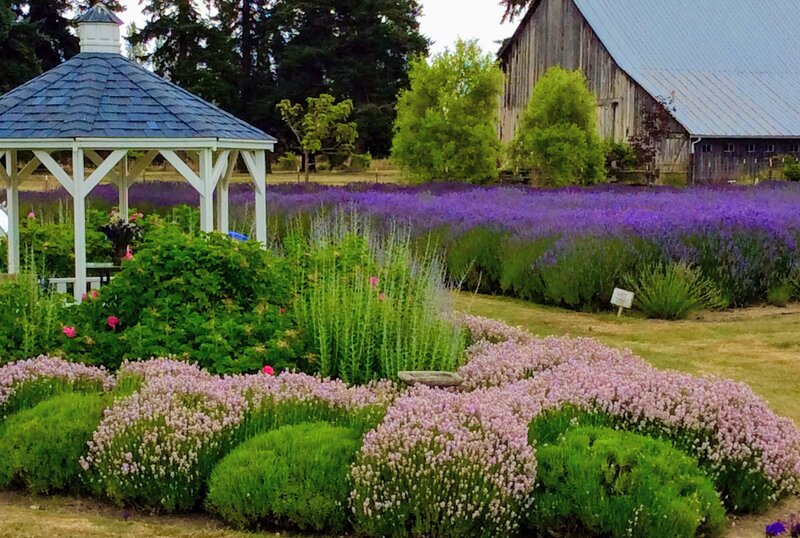
2,000+ hand-harvested plants on 2.5 acres. Gazebo, picnic spots, and U-pick. Open Thu–Sun in summer.
11
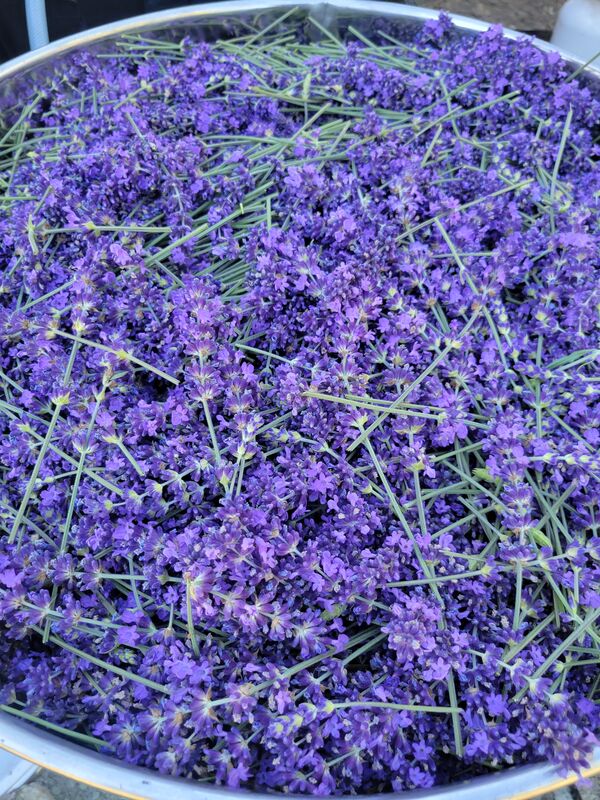
In Bloom Lavender Farm
Closed to public visits in 2026 — products available at the festival.
12
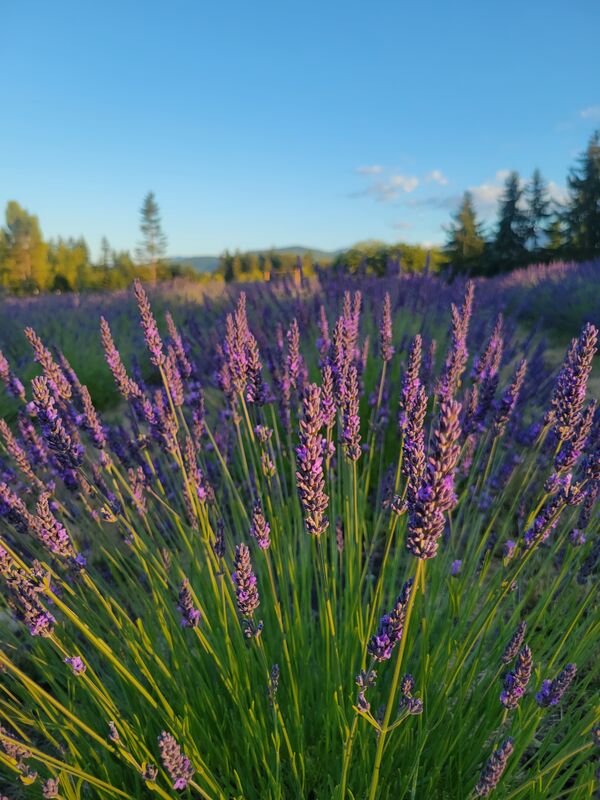
Let's Do Lavender
Products-only SLGA vendor — no farm to visit. Find their goods at festival vendor booths.
The Olympic rain shadow doesn't ask permission. It quietly grows lavender that French farmers respect, in a small valley most travelers drive past on their way to somewhere else.
— Sequim Lavender Growers Association · Est. 1996
Free trip planner
Twelve pages.
Twelve pages.
Two itineraries.
The full valley.
Your free 2026 Trip Planner — the 12-farm loop map, the week-by-week peak-bloom calendar, u-pick tips, and where to stay and eat. The same guide we hand out at the gate, emailed to you and yours to keep.
No spam. About 8 emails between bloom and festival. Unsubscribe whenever.
If you can only come once
Three perfect weekends.
For peak bloom + festival energy
July 17 — 19
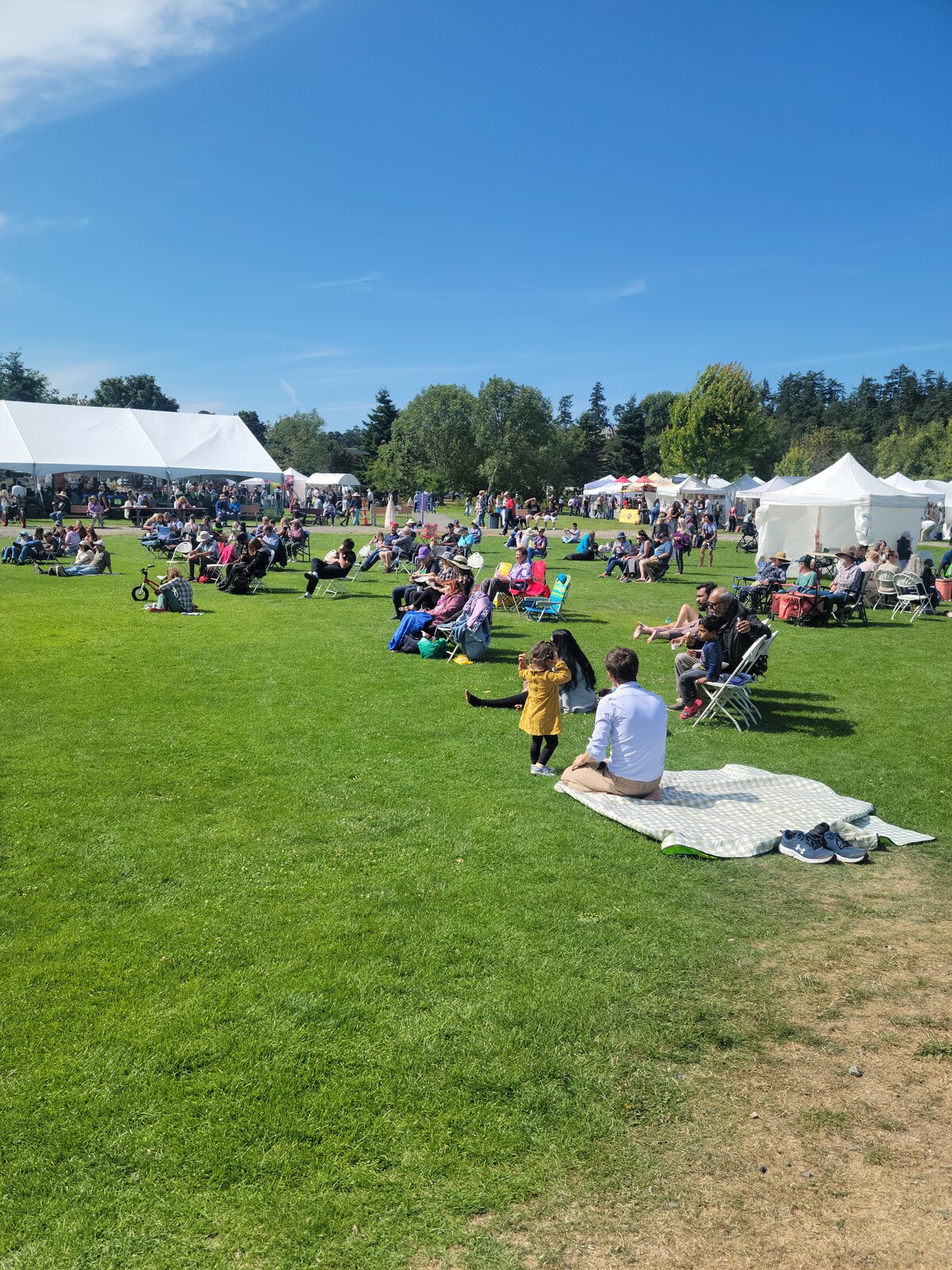
Festival weekend at Carrie Blake Park, plus all 12 farms open. 30,000+ visitors. The full experience. Book lodging in March.
See the festival →For peak bloom + quiet
July 5 — 13
Same lavender, much smaller crowds. Easier parking everywhere. The locals' pick if you only have one weekend.
For the deepest purples
August 10 — 24
Late-bloom varieties, most fragrant fields, fewest people. Underrated. Bring a wide-brimmed hat and a slow pace.
Need to know
Practical things.
Hours
Most SLGA farms open Friday–Sunday, 10 AM – 4 or 5 PM, from May through mid-September. Some open weekdays in peak July. Per-farm hours.
Cost
Most farms are free to visit, with free parking. U-pick lavender is sold by the bundle ($5–15). Some farms have paid distillation tours.
Getting here
90 minutes from Seattle via Bainbridge or Kingston ferry. The ferry routes are dramatically more scenic. Book ferry reservations at wsdot.com.
Where to stay
Sequim has limited lodging. Most visitors stay here, in Port Angeles (20 min west), or Port Townsend (45 min east). Lodging guide.
U-pick + Tools
Most farms provide cutting shears at the front desk. Don't be shy about cutting — the plants prefer being trimmed.
What to bring
Sun hat, sunscreen, real shoes (not stilettos), water, camera with macro lens, cash for vendors, allergy meds if you're sensitive to bees.
Most asked
Questions.
When does Sequim lavender bloom?
Mid-June through mid-September. Peak bloom hits mid-July, right around festival weekend (July 17–19). Early varieties bloom first; the deepest purples come late in the season.
Are the farms free to visit?
Most SLGA member farms are free with free parking. U-pick lavender is usually sold by the bundle ($5–15). Some farms have paid distillation tours — check each farm's page for details.
How far is Sequim from Seattle?
90 minutes via Bainbridge or Kingston ferry, about 2 hours via the Tacoma Narrows Bridge route. The ferry routes are dramatically more scenic.
What's the best weekend to visit?
If you only have one trip: July 5–13 for full bloom without festival crowds, or July 17–19 for festival energy plus full bloom. Quiet seekers should look at mid-August.
Can I U-pick lavender?
Yes, at most SLGA farms. Pricing is by the bundle or by weight. Bring sharp scissors (some farms provide). Don't be shy — the plants prefer being trimmed.
Is Sequim accessible?
Most farms have at least partial wheelchair-accessible paths. Carrie Blake Park (festival venue) is fully accessible. Per-farm accessibility varies; check the farm directory.
The fields
are open.
Add the planner to your inbox. We'll see you in the rows.
Get the Free Trip Planner →
Bloom Season
12 farms · open now
Plan →