Why Sequim Lavender
The science and magic behind North America's Lavender Capital
The Olympic Rain Shadow
A microclimate that rivals Provence, France
Nature's Perfect Storm Shelter
The Olympic Mountains rise over 7,000 feet, creating a massive wall that intercepts Pacific storms. While Seattle gets 37 inches of rain and the western Olympics get over 140 inches, Sequim sits in the dry shadow receiving only about 16 inches a year, comparable to Los Angeles.
It's sunny, too. A year-long study of the rain shadow counted 127 mostly sunny days, compared with 88 in downtown Seattle. Those long, warm summers are what lavender needs to develop rich aromatic oils.
Annual Rainfall Comparison
The Terroir of Lavender
Like fine wine, lavender quality is shaped by place
Glacial Soil
Sequim's soil was deposited by ancient glaciers, creating perfectly drained sandy loam. Lavender hates wet feet — and this soil never holds excess water.
Alkaline Balance
The naturally alkaline pH (7.0-8.0) of our soil matches lavender's native Mediterranean conditions. No amendments needed — nature got it right.
Mineral Rich
Glacial deposits brought a diverse mineral profile that feeds lavender plants complex nutrients, contributing to the depth and complexity of our essential oils.
The French Connection
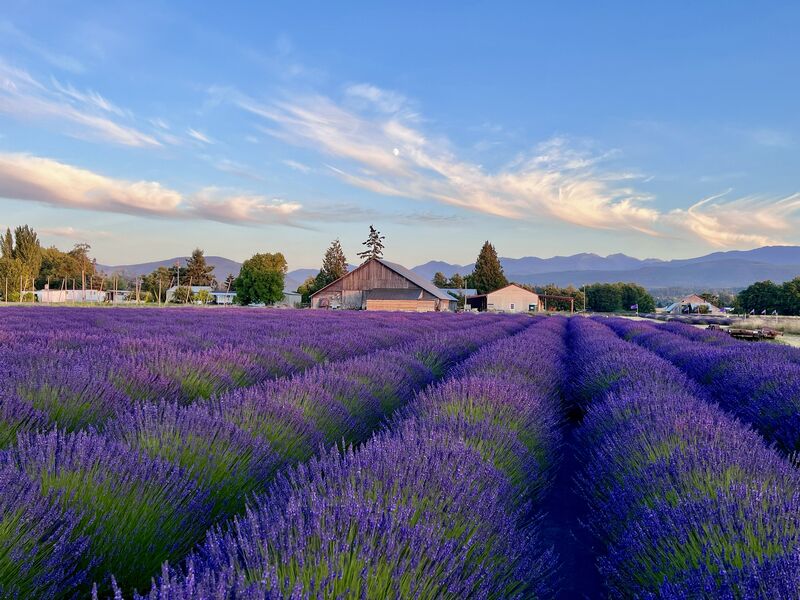
Sequim's dry, sunny climate and well-drained alkaline soil are often compared to the lavender-growing regions of Provence in the south of France.
From Field to Essential Oil
Each harvest transforms thousands of fragrant blooms into pure, therapeutic lavender oil