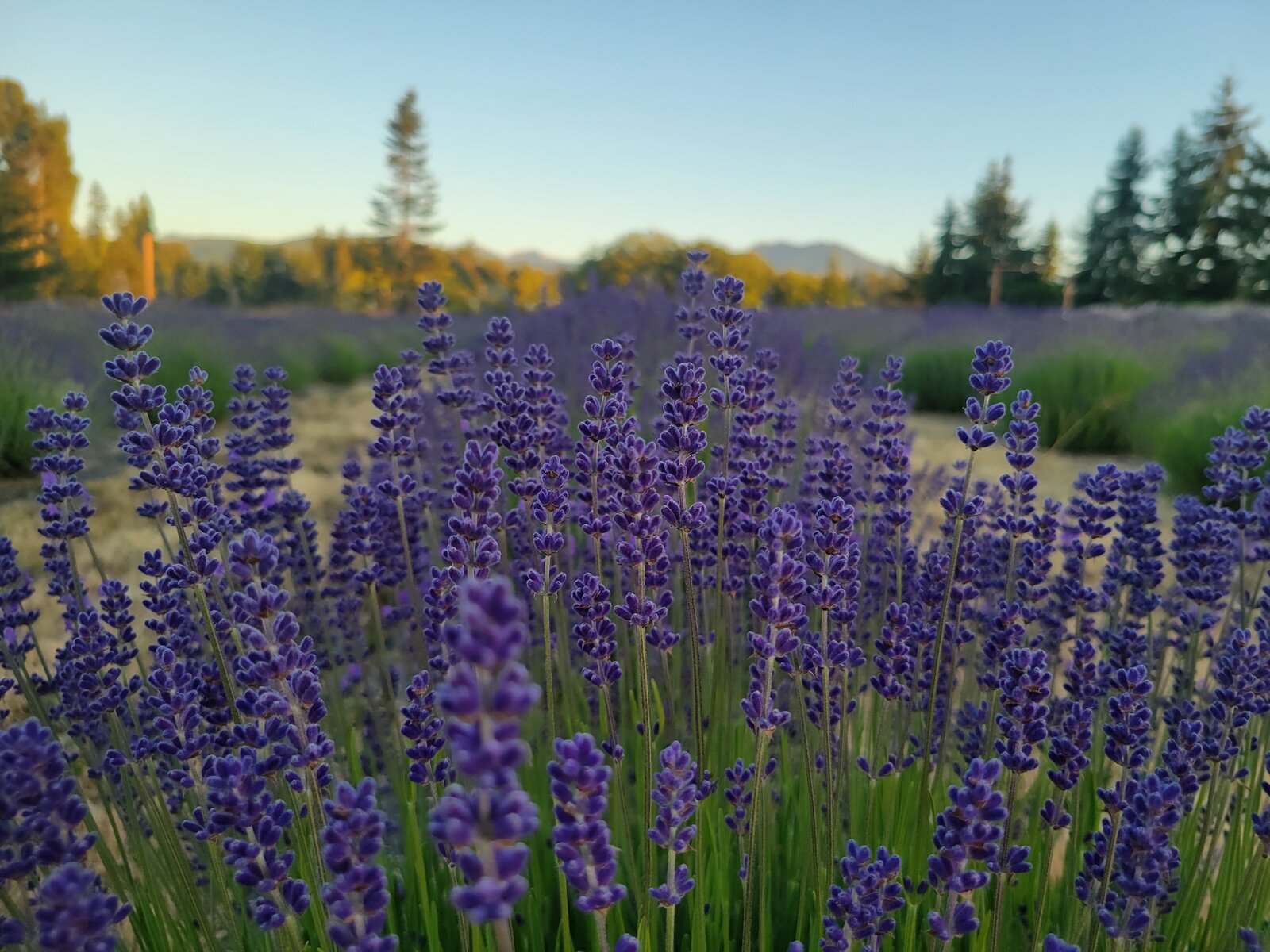
If you've ever wondered where America grows lavender at scale, the answer is one valley. Washington State produces more commercial lavender than anywhere else in the United States, and the heart of that production is Sequim, on the Olympic Peninsula. A cluster of family farms grow many cultivars on the same kind of dry-summer, cool-night microclimate that makes Provence the world's lavender capital. The reason is geography you can see from the road: the Olympic Mountains block weather from the Pacific before it reaches the valley, leaving Sequim with sixteen inches of annual rainfall (vs. Seattle's thirty-eight). The first United States lavender festival was held here in 1997. Three decades later, it's still the longest-running festival of its kind in the country.
In this guide
Why Sequim grows lavender like nowhere else in the US
Lavender is a fussy crop. It needs dry summers, cool nights, well-drained mineral soil, and enough sun without being scorched. Those conditions exist in Provence, in parts of Tuscany, in some of the Mediterranean — and almost nowhere in North America at commercial scale, except Sequim.
The Olympic Mountains create what's called a rain shadow. Pacific weather systems hit the mountains, drop their moisture on the western slopes, and arrive over our valley with much less rain. Sequim gets roughly 16 inches of annual rainfall, comparable to Provence's 18 inches. Seattle, just 90 minutes east, gets 38.
Add cool mineral nights, glacial-deposit soil, and a long, mild growing season, and you have a climate that mirrors the south of France. The original commercial lavender plantings here started in the late 1980s. In 1996, a group of family farms formed the Sequim Lavender Growers Association (SLGA). In 1997, they hosted the first US lavender festival. Other regions have tried to follow — Texas Hill Country has good farms, California's 123 Farm is well-regarded, and there are lavender farms scattered across Oregon and Vermont — but no other US valley grows lavender at this scale, with this many farms, with this much history.
Lavender farms in and around Sequim
Below the farms are ordered by what we think first-time visitors should hit first — but every farm on the list is worth visiting.
Lit Lavender
A Sequim lavender farm with a distinctive on-farm experience: farm animals, family-friendly activities, and glamping tents. Lavender products and essential oils available in the gift shop.
B&B Family Farm
One of the most visually iconic farms in the valley — a historic barn standing over fields of lavender. A family-run farm offering farm tours covering growing, processing, cleaning, and distilling. The lavender ice cream is a popular reason to stop here, along with the essential oils.
Graysmarsh Farm
A long-running family farm with a broad U-pick experience — lavender plus berries such as raspberries, blueberries, blackcurrants, and gooseberries in season. Picnic lawn and a relaxed family vibe. Strong choice if you have kids or want a slower visit.
Olympic Bluffs Cidery & Lavender
A lavender farm with a cidery on-site. Lavender fields with bluff views over the Strait of Juan de Fuca. Tasting flights for adults, fields for kids. The pairing of lavender and cider plus the bluff views make this a distinctive stop.
Old Barn Lavender Co.
The working antique barn alone is worth the photos. Old Barn is known for its dried wreaths and bouquets. Smaller, slower-paced visit, with a distinctive gift shop.
Nelson's Duckpond & Lavender
The quietest stop on most visitors' loops. A working duck pond surrounded by lavender beds. Family-run, scenic, and the kind of place where you can sit on a bench and read for an hour. Not the loudest visit, but often the most memorable.
Fat Cat Garden & Gifts
An eclectic gift shop that goes beyond lavender — curated PNW goods, vintage finds, and one of the best lavender selections in the valley. Worth the detour if you want something distinctive to bring home.
Rancho La Morada
Hilltop setting with Mediterranean-style architecture. The light here at golden hour is unreal, which is why this farm shows up disproportionately in photographer's portfolios from the region. Smaller than the larger farms, but visually unmatched.
Meli's Lavender
One of the smaller, more intimate farms in the area. Family-run, slow-paced, and good for visitors who don't want a tourist-scale experience. Strong choice if you're traveling without kids or want a quiet afternoon visit.
Free 2026 Sequim Lavender Trip Planner
Two complete itineraries, the farms, bloom timeline, where to eat, where to stay, best photo spots. Emailed to you free.
Get the Trip Planner →When to visit · Bloom timeline 2026
Lavender blooms in Sequim from mid-June through mid-September. Different varieties peak at different times, so when you visit depends on what kind of trip you want.
- Mid-June to early July (early bloom): Hidcote, Munstead, and English varieties lead. Lighter purples, smaller crowds, perfect for first-timers who want quiet.
- Mid-July (festival week + peak): Grosso, Provence, Royal Velvet all blooming. Maximum visual impact. The Sequim Lavender Festival® hits July 17–19 — major energy and crowds.
- Late July to early August (mid bloom): French and intermediate varieties. Festival is over, fields are still gorgeous, weekends quieter. The locals' pick.
- Mid-August (late bloom): Deepest purples, most fragrant fields. Often underrated.
- Late August to mid-September (final flush): Late-season + second-bloom varieties. Quietest weekends.
If you only have one weekend, the locals' picks are July 5–13 (peak bloom without festival crowds) or July 17–19 (peak bloom AND festival energy together).
How to get there
From Seattle (~90 minutes)
Three routes. The two ferry options are dramatically more scenic.
- Bainbridge ferry → Bainbridge Island → Sequim — 90 min total, scenic route, ferry runs every 50 min.
- Edmonds ferry → Kingston → Sequim — slightly faster, less waiting at the terminal.
- Tacoma Narrows Bridge → Bremerton → Sequim — no ferry, ~2 hours.
Book ferry reservations at wsdot.com. Walking onto the ferry without a car is the cheapest option but means renting a car or taking public transit from the terminal.
From Portland (~4 hours)
I-5 north to Olympia, then SR-101 west around the Olympic Peninsula. A long drive but the SR-101 stretch around Hood Canal is beautiful.
From Vancouver, BC (~3 hours including ferry)
Best route: cross at Peace Arch border, drive south to Edmonds or Kingston, take the ferry. Or take the Black Ball Ferry from Victoria directly to Port Angeles (1.5 hours), then drive 20 minutes to Sequim. The Black Ball route is the easiest for Canadian visitors.
The Sequim Lavender Festival® (Year 30)
The annual Sequim Lavender Festival® is July 17–19, 2026 at Carrie Blake Park in Sequim. It's the longest-running lavender festival in the United States — year 30. Festival in the Park is free. 200+ artisan vendors. Live music at the James Center main stage runs throughout the weekend. Member farms are open festival weekend.
If you can only visit once, festival weekend is when the energy is highest. If you want a quieter visit, come in late July or August when bloom is still strong but crowds have thinned. Festival info, schedule, parking, vendor list.
Most-asked questions
Are Washington lavender farms free to visit?
Most SLGA member farms in Sequim are free to visit with free parking. U-pick lavender is sold by the bundle ($5–15). Some farms offer paid distillation tours or workshops. The annual festival in July is free admission.
Can I bring my dog?
Service animals are welcome at all SLGA farms and at the festival. Other pets policies vary by farm — many farms welcome dogs on leash, but some have working farm animals (sheep, goats, ducks) that don't appreciate visitors. Check per-farm pages or call ahead.
Can I U-pick lavender?
Yes, at most SLGA farms. Pricing is typically by the bundle. Most farms provide cutting shears at the front desk. Don't be shy about cutting — the plants prefer being trimmed regularly.
What about lavender farms elsewhere in Washington?
There are a handful of smaller lavender farms scattered across Washington — in Walla Walla, Yakima, the Methow Valley, and the Skagit Valley — but none at the SLGA's scale. The Sequim valley remains the only US region with this density of commercial lavender farms in one place. If you're a serious lavender enthusiast and want a multi-day trip, Sequim is the only Washington destination worth a dedicated drive.
Is Sequim wheelchair accessible?
Most SLGA farms have at least partial wheelchair-accessible paths. Carrie Blake Park (festival venue) is fully accessible. Per-farm accessibility varies — call ahead or check the farm directory for specifics.
Where should I stay?
Sequim has limited lodging. Most visitors stay in Sequim, in Port Angeles (20 min west), or in Port Townsend (45 min east — historic Victorian seaport, worth it). Festival weekend lodging within 30 min sells out by April. Lodging guide.
Plan your Sequim weekend in 10 minutes
Free trip planner. Pick dates, pick farms, pick a route. We email you the plan.
Open the planner →Published by the Sequim Lavender Growers Association · Founded 1996 · Family farms · The longest-running lavender festival in the United States · About SLGA